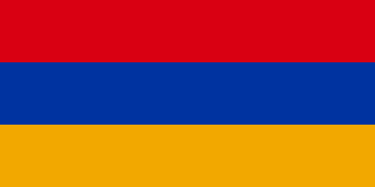
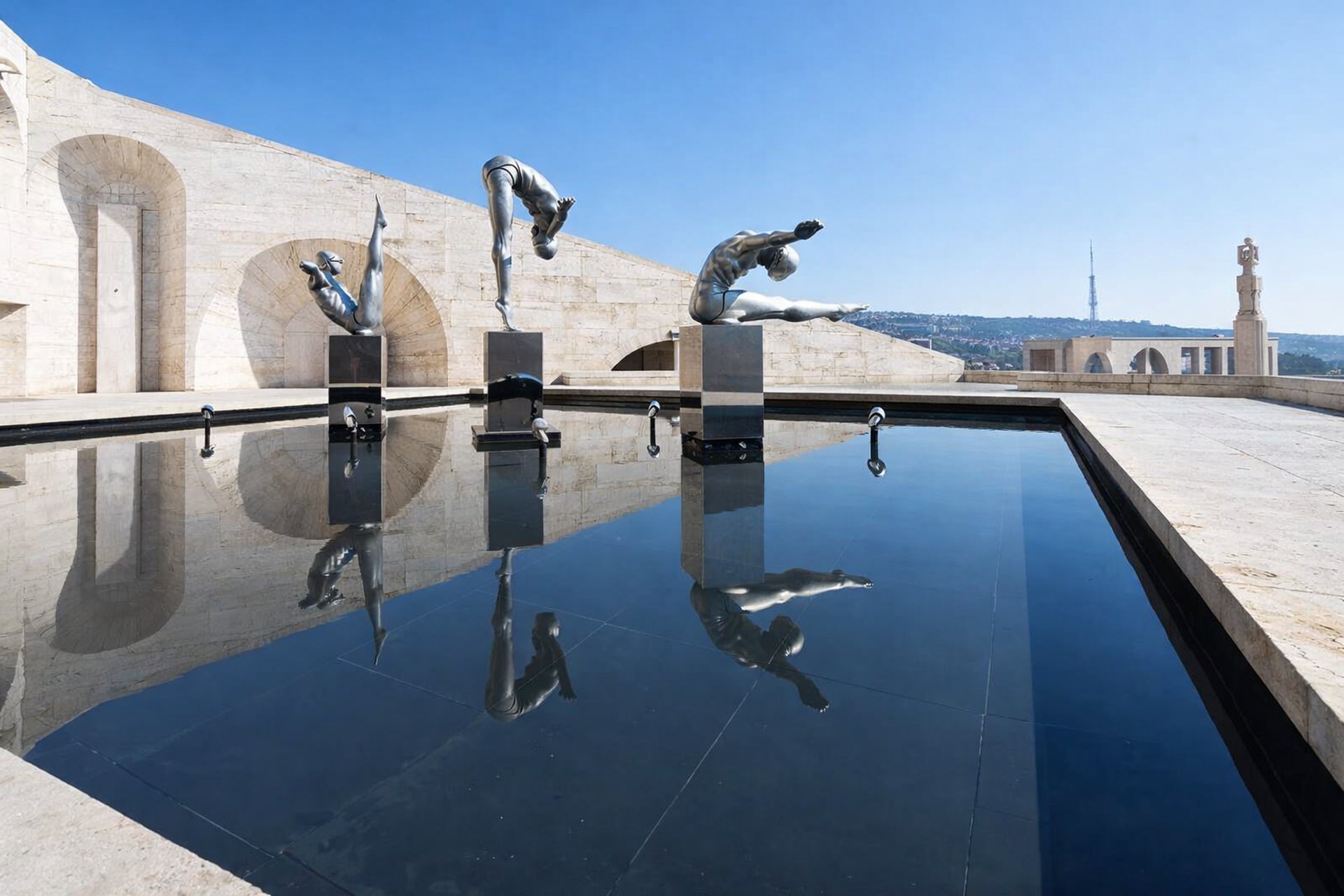
COMPLETE ARMENIAN COURSE
MASTER THE LANGUAGE AND CULTURE IN 30 DAYS
THE ARMENIAN LANGUAGE: GATEWAY TO YOUR FUTURE
Welcome on behalf of the Armenian Institute!
If you wish to learn Armenian you are in right place. We have created the world's most Complete Armenian Master Course to take you from absolute beginner to native speaker in 30 days. In this section you will find all the information and answers you need about learning Armenian, such as: the best learning method, reasons to learn this language, the costs associated, the difficulty spikes to watch out for, how to improve your prior skills if you are stuck in a plateau, as well as the differences and similarities to other commonly spoken languages.
First of all, you should know that Armenian, known in its native form as Hayeren, belongs to its own independent branch of the Indo-European language family, meaning it is not closely related to other neighboring languages. With around 7 million speakers worldwide, Armenian has a long written tradition dating back to the 5th century, when the Armenian alphabet was created.
Armenian exists in two main standardized forms: Eastern Armenian is spoken in Armenia, Iran, and much of the post-Soviet diaspora. It is the official language of the Republic of Armenia and is the variety taught in schools and used in government, media and public life. Western Armenian, on the other hand, developed among Armenians of the Ottoman Empire and is today mainly spoken by diaspora communities in the Middle East, Europe and the United States. The two varieties are mutually intelligible, but they differ noticeably in pronunciation, grammar, and some vocabulary.
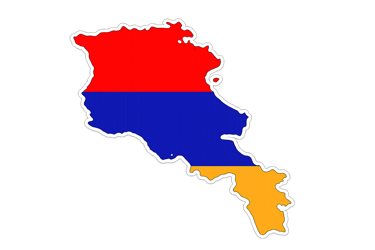
This course focuses on Eastern Armenian since this is the official language of Armenia.


Armenian is a difficult language to learn. It’s distinctive features can be found in its unfamiliar Vocabulary, complex Grammar, unique Alphabet and melodic Pronunciation. The challenge with many learning methods is that they only take you part of the way. Mobile apps are fun and motivating, but they often stay on the surface, giving you basic vocabulary without real depth in grammar or conversation. Live courses offer great interaction with teachers but can be inflexible and expensive, making them difficult to sustain long term. University programs are academically rigorous, but they demand years of commitment and come with high living and tuition costs. Textbooks provide structure and clarity, but they lack immersion and often don't provide the practical information that learners actually need.
If you are serious about learning Armenian, commit to a method that makes you actually speak the language. With the right system, you can go beyond memorised phrases and truly speak, read, and think in Armenian. The journey is demanding, but the rewards — access to Armenian news, cinema, music, history, personal connections and work opportunities — are immense. The time to start is now, with our Complete Armenian Master Course that has been designed to give you nothing less than complete fluency.
Start your Armenian journey with us today!

EXPAND YOUR KNOWLEDGE
If you are serious about learning Armenian, we recommend that you download the Complete Armenian Master Course.
You will receive all the information available on the website in a convenient portable digital format as well as additional contents: over 15.000 Vocabulary Words and Useful Phrases, in-depth explanations and exercises for all Grammar Rules, exclusive articles with Cultural Insights that you won't find in any other textbook so you can amaze your Armenian friends thanks to your knowledge of their country and history.
With a one-time purchase you will also get hours of Podcasts to Practice your Armenian comprehension and speaking in order to achieve your own Master Certificate.
Start speaking Armenian today!
FREQUENTLY ASKED QUESTIONS
Why learn Armenian?


5 reasons to learn Armenian
It's Fun! Join a Unique Club
Armenian is a fascinating and unique language that challenges learners with its distinctive sounds, ancient alphabet, and rich vocabulary. Unlike most European languages, Armenian forms its own independent branch of the Indo-European language family, offering learners a completely different perspective on language structure and history. Armenian is spoken by around 6–7 million people worldwide, making it a relatively small but globally dispersed language. Learning Armenian is like joining a unique cultural community—few non-Armenians take on the challenge, which makes it a truly special and rewarding skill.Gain a Deeper Understanding of History and Culture
Learning Armenian opens the door to one of the world’s oldest continuous cultures. Armenia has a history stretching back thousands of years, shaped by ancient kingdoms, trade routes, and interactions with powerful neighbors such as Persia, Byzantium, the Ottoman Empire, and Russia. Armenia was also the first country in the world to adopt Christianity as a state religion in 301 AD. Through the Armenian language, you gain insight into a rich literary tradition, historic resilience, and a culture that has preserved its identity through centuries of change.Armenians Appreciate When You Speak Their Language
Armenians take immense pride in their language and alphabet, which were created in the 5th century by Mesrop Mashtots and remain a cornerstone of national identity. If you make the effort to speak even a few words, locals will warmly appreciate it. Armenians are known for their hospitality and friendliness, and a simple “Barev!” (Hello!) or “Shnorhakalutyun!” (Thank you!) can instantly create a connection and open doors to meaningful conversations.Business Opportunities in a Growing Economy
Armenia has a developing and increasingly dynamic economy with growing opportunities in sectors such as information technology, engineering, tourism, and services. The country has built a reputation as a regional technology hub, with a strong startup ecosystem and highly skilled workforce. Armenia’s strategic location between Europe and Asia, along with its global diaspora networks, makes it an interesting destination for entrepreneurs and international partnerships. Learning Armenian can provide a valuable advantage when building trust, forming local relationships, and navigating the business environment.
Visit Armenia an Affordable and Unforgettable Experience
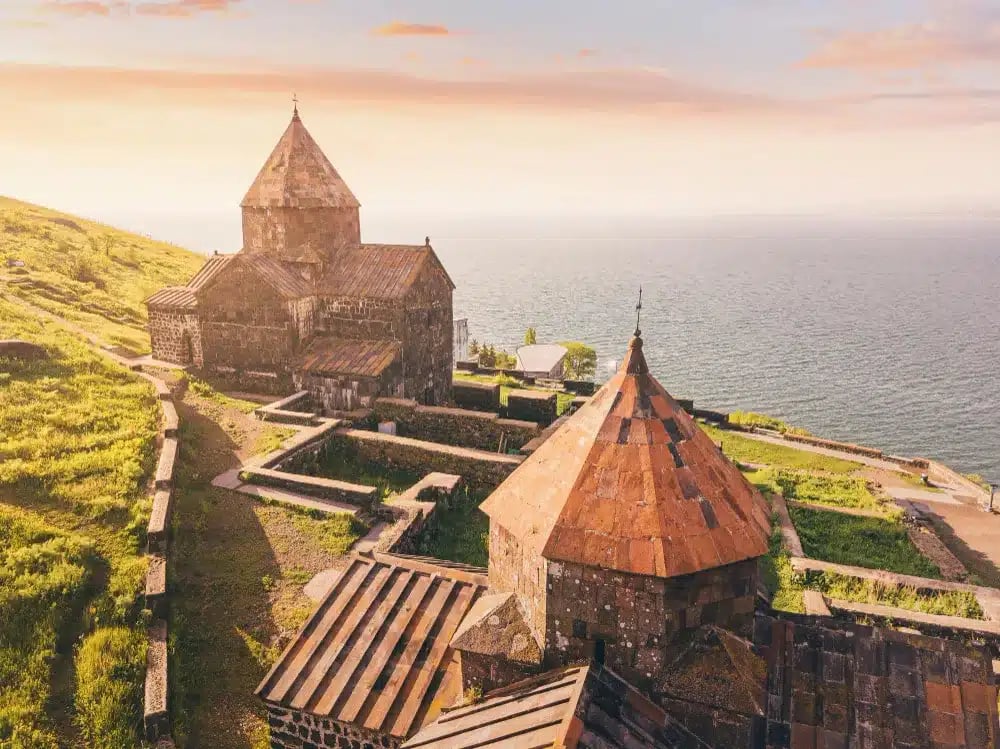
Armenia is an extraordinary travel destination known for its dramatic mountains, ancient monasteries, and deep cultural heritage. Visitors can explore historic landmarks such as the monasteries of Geghard and Tatev, the shores of Lake Sevan, and the vibrant capital city of Yerevan with its cafés, museums, and lively cultural scene. Beyond the cities, Armenia offers breathtaking landscapes, traditional villages, and a renowned cuisine featuring dishes like lavash, khorovats, and dolma. Traveling in Armenia is relatively affordable, making it an accessible destination for those seeking authentic history, culture, and natural beauty.
How much does it cost to learn Armenian?


Armenian Mobile Apps
Mobile apps have become one of the most popular entry points for learning Armenian in recent years, especially among young people, due to their accessibility on phones. These apps allow learners to repeat basic vocabulary on the go, through gamified systems that aim to keep learners engaged to sell them as many ads as possible. No one has ever really become fluent in Armenian by using these apps but they can make daily studying more approachable, especially for people that are not completely sure if they want to commit to a more comprehensive language course.
Costs:
Many apps (e.g., Duolingo, Babbel, Pimsleur, Rosetta Stone) use paid monthly subscriptions averaging $20/month without ads or one life-time purchase for $200-$600.
Pros:
Self-paced content great for daily bite-sized repetition.
Fun language based games with flashy animations.
Good for absolute beginners to decide if interested.
Cons:
Quality and depth are overall quite low.
Subscription costs can accumulate quickly unless you opt for a lifetime deal.
Gamification makes it seem like you are progressing when you actually aren't.


Armenian Textbooks
Textbooks are a cost-effective and time tested resource for studying Armenian, or any language for that matter, just like when you were at school. Their adoption in academic settings has brought a lot of needless information into these books which on the contrary should be strictly practical. Textbooks offer a fixed progression with lots of grammatical terms and scholarly explanations that risks making the learning process feel like a chore. As with mobile apps, it is impossible to actually become fluent in the Armenian language with one single textbook, due to the lack of real life practice and interactivity, which is why even the most diligent learners only achieve a basic language level.
Costs:
Text-only textbooks cost around $20-$35 per volume. These usually include grammar explanations, vocabulary lists and exercises but do not provide any listening material. Textbooks with good quality accompanying audio resources are available for about $50-$60.
Pros:
One-time cost, no ongoing fees.
Textbooks with audio build solid grammar and listening comprehension.
Ideal for structured, self-paced study.
Cons:
Audio may be outdated or limited (if included at all).
Less interactive, needs self-discipline.
Might lack cultural/contextual immersion.


Studying Armenian at a University
University programs provide the most academically rigorous and comprehensive Armenian training. You will become fluent if you attend the courses and get a degree. These courses require many years of commitment and are best suited for those pursuing careers directly connected to the knowledge of the Armenian language like translators or teachers, which given the current state of the market might not be the wisest career choices, especially since you will be competing with native speakers that do not require any formal training to speak their mother tongue.
Costs:
Tuition for foreign students in Armenia is generally affordable compared to many European destinations. Depending on the university and program, tuition fees usually range from about US $1,500 to US $4,000 per semester. Monthly living expenses are also relatively cheap. In the capital city of Yerevan, students typically spend between $400 and $700 per month depending on lifestyle and accommodation choices. Rent for a shared student apartment usually ranges from about $200 to $350 per month, while food and groceries average around $150 to $250. Public transportation in Armenia is also inexpensive. Students can use buses, minibuses, and the Yerevan metro for very low fares, with monthly transport costs typically ranging between $10 and $20. Overall, the total yearly cost including tuition and living expenses generally ranges between about $12,000 and $15,000 depending on the university, the city, and the lifestyle.
Pros:
Deep, structured academic immersion.
Degree qualification or recognized certifications.
Full immersion thanks to real Armenian speakers and situations that require language use.
Cons:
Time-intensive and long-term commitment with limited professional opportunities compared to other degrees.
Costs of living in Armenia add up quickly.
Difficult to find Armenian university courses outside of Armenia.


Online Armenian Courses
Online courses represent the most time and cost effective solution, with a personalised and immersive approach to language learning, thanks to structured lessons guided by professional teachers. When taken online these classes allow students to interact with their teachers in real time, providing opportunities for conversation practice, immediate feedback and progress tracking. Online courses come with three major downsides due to the extremely high costs of private tuition especially for beginners, varying teaching quality that depends on the individual teacher's experience and the fact that they don't allow the flexibility of other significantly cheaper self-study alternatives.
Costs:
Average Armenian 10-week course online with 3-5 live sessions costs US $600-$1,000/month
Private Tutors (available on Preply or Italki) cost US $10–$100 per hour, depending on the teacher’s qualifications
Pros:
Highly interactive with real-time feedback.
Customization, especially with one-on-one sessions.
Accountability and access to experienced teachers.
Cons:
Very expensive with no guarantee of success.
Lower flexibility compared to mobile apps or self-study since it depends on teacher's schedule.
Teaching quality may vary greatly between tutors.


Complete Armenian Master Course
Our Complete Armenian Master Course represents the most comprehensive and cost effective solution available, offering a fully structured and immersive approach to learning Armenian without the limitations of traditional textbooks, university programs, online classes or mobile phone apps.
Designed by Armenian language experts, the course provides step by step lessons, clear grammar explanations, foundational vocabulary, real life practise with dialogues, pronunciation guides, exclusive cultural insights, with hours of audio contents. Unlike online courses, it does not depend on teacher availability or fluctuating teaching quality. Unlike university programs, it avoids rigid schedules and high tuition fees. Unlike phone apps, it goes far beyond basic drills by guiding learners from beginner to advanced level and does not feature recurring monthly payments or subscriptions.
Study anytime and anywhere, progressing at your own pace while following a carefully structured course toward fluency in Armenian and cultural understanding of its people in less than 30 days.
How difficult is Armenian?

One of the biggest obstacles to learning Armenian isn’t necessarily the grammar. It is the lack of comprehensive learning resources that effectively bridge the gap between beginner materials and advanced content. Many learners find themselves stuck after reaching a beginner level because there are not enough structured books, courses, or accessible materials to help them progress further. Unlike languages such as Japanese or Korean, where global pop culture like anime or K-dramas has created enormous international demand, Armenian media and culture have not spread worldwide in the same way. As a result, fewer people attempt to learn Armenian, which has historically led to a smaller selection of textbooks, online courses, and language learning tools.
This challenge is also complicated by the fact that Armenian is not widely spoken outside Armenia and parts of the Caucasus, even though there is a large Armenian diaspora around the world. Armenian communities exist in countries such as Russia, the United States, France, Lebanon, and Iran, but the language itself is still less visible internationally compared to major global languages. While languages such as Spanish or French have hundreds of millions of speakers across multiple continents, Armenian is spoken by a relatively small global population. This makes it more difficult for learners to find immersion opportunities, conversation partners, and consistent real-world exposure to the language.
We recognize that the limited availability of high-quality Armenian learning resources can be a major challenge, and our goal is to help bridge this gap by creating content that supports learners beyond the beginner level and guides them toward real fluency.
If you have any suggestions for future lessons or articles, feel free to send them to pr@armenian-institute.com. We would love to hear your ideas and continue improving our materials to better support your learning journey.
Should I learn Eastern or Western Armenian?
Armenian exists in two main standardized varieties: Eastern Armenian and Western Armenian that both descend from Classical Armenian, also known as Grabar, the literary language that emerged in the 5th century after the creation of the Armenian alphabet by Mesrop Mashtots. For centuries, this classical form served as the language of literature, religion, and scholarship.
Because both modern varieties evolved from the same historical source, they share a large portion of their vocabulary, grammatical structure, and cultural references. Even today, speakers of Eastern and Western Armenian can often understand each other, especially in written form, because the core structure of the language remains the same.
One of the strongest links between Eastern and Western Armenian is the Armenian alphabet. Both varieties use the same writing system of 39 letters created in the early 5th century. This means that once a learner becomes comfortable reading Armenian, they can access texts written in either variety. Eastern and Western Armenian have largely similar grammar. The most noticeable differences between Eastern and Western Armenian appear in pronunciation.
Some consonants are pronounced differently between the two varieties. For example, letters that represent voiced, voiceless, and aspirated consonants in Eastern Armenian may correspond to different sounds in Western Armenian.
Another difference lies in vocabulary. Because Eastern and Western Armenian developed in different political and cultural environments, each variety absorbed influences from surrounding languages. Eastern Armenian was influenced by Persian and Russian due to historical connections with the Russian Empire and later the Soviet Union. Western Armenian absorbed more words from Turkish, Arabic, and French due to the long presence of Armenian communities in the Ottoman Empire and later in diaspora communities in Europe and the Middle East. Even with these influences, the majority of core vocabulary remains shared.
Today, Eastern Armenian is the official language of the Republic of Armenia and is also widely spoken in parts of the South Caucasus, especially in Armenia and Iran.
Western Armenian developed historically among Armenians living in the Ottoman Empire. After the events of the early 20th century, Western Armenian became primarily a diaspora language spoken in communities across the Middle East, Europe, and the Americas.
Both varieties are valuable and culturally important, but there are several practical reasons why many learners begin with Eastern Armenian. If you plan to travel to Armenia, study there, or interact with people living in the country, Eastern Armenian will be the most useful variety to learn first.
How to become fluent in Armenian in 30 days?


These are 5 proven methods that we have developed as language learners (not only as teachers!) that will help you achieve complete mastery of any language:
1. Immerse Yourself Completely
Surround Yourself: Change the language of your phone, computer, tv, console, news sources, radio stations, song playlists and streaming apps to the language you want to learn.
Engaging Content: Listen to native music, watch original movies, learn about the Culture and history of the country on Youtube. This will help you stay motivated and reduce the initial frustration.
Make Mistakes: Travel to the country where the language is spoken and don't be afraid to engage with the locals. People will be amazed at your efforts to learn their language.
2. Focus on the Most Useful Words and Phrases
Study Efficiency: Learn the top 3000 words in the language, as they often cover 80-90% of everyday conversations. Learning takes time but that doesn't mean it has to take very long to see results.
Real Conversations: Start by practising with common phrases you'll
actually use in real-life situations, like greetings, ordering food, asking for directions, etc.
3. Use Memorization Techniques
Spaced Repetition: Our Courses are based on spaced spaced repetition systems (SRS) to help you memorize words and grammar in the long term and with miminal effort by showing them to you in progression.
Mnemonic Devices: trick your brain and speed up the learning process by trying to think of an example or "story" for each new word / expression you struggle to remember.
4. Learn the Language based on the Context
Practice Makes Perfect: Remember that your grammar doesn't have to be perfect as long as you can be understood! There is no shame in using simple phrases to get you point across.
Shadowing Technique: Repeat in your head after native speakers in real-time while listening or watching videos with original subtitles to improve your comprehension.
5. Consistency is Everything
Daily Practice: Even just 30 minutes a day is more effective than sporadic, long day study sessions. Take breaks often when reading and always have fun to increase productivity.
Compound Results: Small, achievable goals like reading 5 pages daily, or even just watching a movie or playing a videogame every evening produce results over time if you don't see them immediately.
Why can't I improve in Armenian?


The Foreign Service Institute (FSI) of the United States Department of State classifies Armenian as a Category III language, meaning it is more challenging for native English speakers to learn than most European languages, though generally not as difficult as some East Asian or Arabic languages.
Several factors contribute to the difficulty of learning Armenian for English speakers:
Unfamiliar Vocabulary
Unlike languages such as French, German, or Spanish, Armenian shares relatively few obvious cognates with English. Although Armenian belongs to the Indo-European language family, it forms its own independent branch and has developed a vocabulary that often looks unfamiliar to learners. For example:
Barev (hello) – no resemblance to common greetings in English
Shnorhakalutyun (thank you) – very different from English equivalents
Aysor (today) – again, no direct connection to familiar English words
Unique Alphabet
Armenian uses its own alphabet, created in the early 5th century by Mesrop Mashtots. The script consists of 39 letters and is completely different from the Latin alphabet used in English. While the writing system is highly logical and phonetic once learned, mastering a new alphabet adds an additional step for beginners.
Rich and Structured Grammar
Armenian grammar includes several noun cases and a complex verb system that expresses tense, aspect, and mood. Instead of relying heavily on word order like English, Armenian often uses grammatical endings and particles to convey relationships within a sentence.
Different Sound System
Armenian contains several consonant sounds that are unfamiliar to English speakers, including aspirated and ejective consonants. Learning to hear and pronounce these distinctions correctly can take practice for beginners.
Flexible Sentence Structure
While Armenian commonly follows a subject–object–verb order, word order can change depending on emphasis or context. This flexibility may initially feel unfamiliar to learners who are used to the relatively fixed word order of English.
Our Armenian language course is designed to maximize your learning efficiency and help you build practical communication skills quickly. Rather than overwhelming you with complex grammar rules all at once, our Natural method develops your abilities step by step so that you can begin speaking, understanding, and participating in real-life conversations from the very beginning.
Is Armenian similar to other languages?


Armenian belongs to the Indo European language family, but it forms its own independent branch within that family. Unlike many Indo European languages that belong to large subgroups such as Germanic, Romance, or Slavic, Armenian developed along a separate historical path and does not have any closely related living sister languages. This makes Armenian one of the most distinctive languages in the world.
Geographically, Armenian developed at the crossroads of several civilizations. Throughout its history it has been surrounded by languages from different families such as Georgian (Kartvelian), Turkish (Turkic), and Persian (Iranian). Because of Armenia’s position between powerful empires and major trade routes, Armenian absorbed vocabulary from many cultures while still preserving its own grammar, sound system, and alphabet.
Iranian languages (especially Persian)
Because Armenia was ruled or strongly influenced for centuries by Iranian empires such as the Achaemenids, Parthians, and Sasanians, many Armenian words originate from Middle Persian and Parthian.
շահ [shah] (king) – from Persian shāh
մարզ [marz] (province, region) – from Middle Persian marz meaning border or frontier province
պարտեզ [partez] (garden, park) – from Persian pardis, the same root that gave English paradise
Greek
After Armenia adopted Christianity in 301 AD, Greek religious and intellectual vocabulary entered Armenian through contact with the Byzantine world and early Christian literature.
Քրիստոս [Khristos] (Christ) – from Greek Christos
փիլիսոփայություն [pilisopayutyun] (philosophy) – from Greek philosophia
Turkic languages
Long contact with Turkic speaking peoples during the Seljuk and Ottoman periods introduced several everyday and culinary terms into Armenian.
դոլմա [dolma] (stuffed vegetables) – from Turkish dolma
բոստան [bostan] (vegetable garden or melon field) – from Persian through Turkish bostan
քյաբաբ [kyabab] (kebab) – from Turkish kebap
Russian and European languages
During the 19th and 20th centuries, especially under the Russian Empire and the Soviet Union, Armenian adopted many modern technical and administrative terms from Russian and other European languages.
ինստիտուտ [institut] (institute) – from Russian institut
տելեֆոն [telefon] (telephone) – from international scientific vocabulary
EXPAND YOUR KNOWLEDGE
If you are serious about learning Armenian, we recommend that you download the Complete Armenian Master Course.
You will receive all the information available on the website in a convenient portable digital format as well as additional contents: over 15.000 Vocabulary Words and Useful Phrases, in-depth explanations and exercises for all Grammar Rules, exclusive articles with Cultural Insights that you won't find in any other textbook so you can amaze your Armenian friends thanks to your knowledge of their country and history.
With a one-time purchase you will also get hours of Podcasts to Practice your Armenian comprehension and speaking in order to achieve your own Master Certificate.
Start speaking Armenian today!
Send us your suggestions to: pr@armenian-institute.com
Learn the official language of Armenia in 30 days thanks to the most complete Grammar, Vocabulary and Culture courses available. Start speaking Armenian today!
© Copyright 2026 Armenian Institute
Come visit Armenia!